Guide · 9 min read
Hornbill Festival, the first-timer's guide
The Hornbill Festival rewards people who know its shape. Ten days, one heritage village, sixteen-plus tribes, and a daily rhythm that has not changed since 2000. Here is what your first one actually looks like.
Quick answer: A Hornbill day runs: morning arena performances (be there by 9), afternoon morung-hopping and food stalls at Kisama, evening back in Kohima for the night carnival and concerts. Base yourself in Kohima or our festival campsite, carry cash, book stays by October, and treat December nights as proper cold, Kohima sits at about 1,400m. Packages from ₹3,999 include transport, permits and entry passes.
Day one, arriving
Fly or train into Dimapur, then three hours up to Kohima. The road is slow and beautiful; festival week adds traffic. If you’re on one of our packages, transfers are handled, including the timed run to Kisama on festival mornings. Settle in, withdraw cash, sleep early. The first arena morning is the reward for it.
The daily rhythm (it doesn’t change)
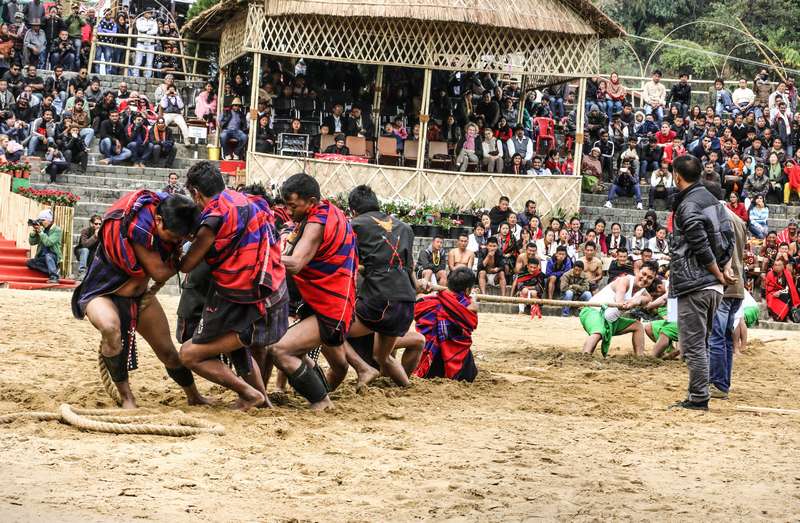
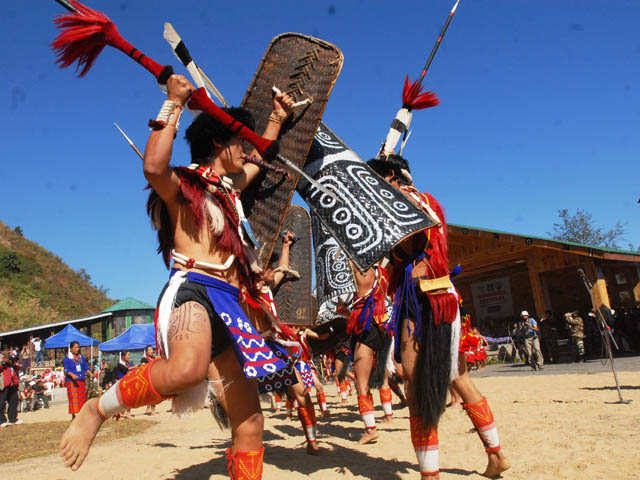
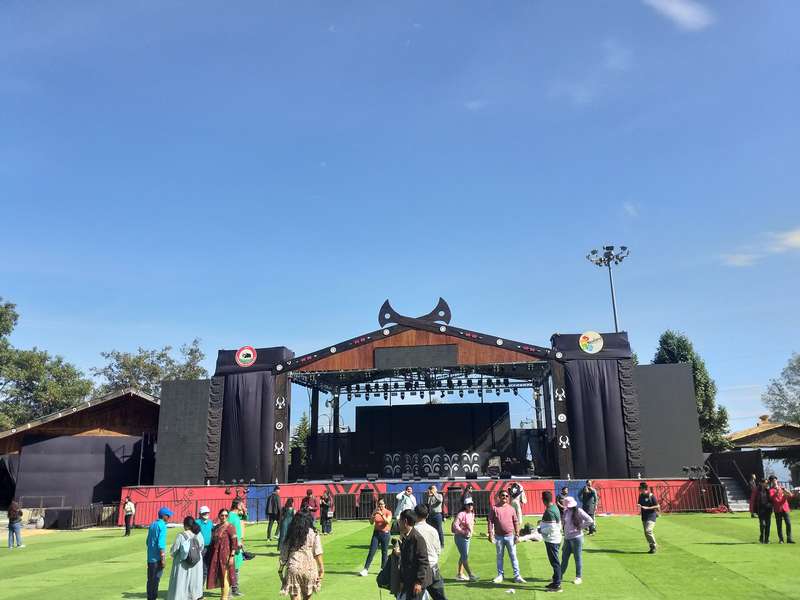
Morning, the arena. Scheduled performances begin mid-morning on the main stage: each tribe takes its slot in full dress, war dances, folk songs, indigenous games. Sit through at least two tribes back-to-back; the contrast between them is the whole point of the festival.
Afternoon, the morungs. The programme loosens and everyone disperses into the morungs, the traditional tribal houses ringing the ground. This is where food, rice beer, crafts and conversations live. Elders and teenagers share the same room. This is the part first-timers under-budget time for, and the part they write home about.
Evening, down the hill. The carnival lights up Kohima’s main road, and the rock concerts run parallel to the festival. If your legs survive the day, go. The concerts are how festival week sounds to locals.
What first-timers get wrong
- Treating it like a city festival. Kisama is a hill ground, sloped, uneven, huge in the sun and cold by late afternoon. Footwear matters more than outfits.
- No cash. ATMs strain all week. Withdraw in Dimapur on the way in.
- Permits. The ILP is waived during festival week, Indians enter with a photo ID. Any other season it is ₹200 online at ilp.nagaland.gov.in; foreigners ₹500.
- Skipping the mornings. Afternoon stalls are social, mornings are the show. Miss the arena and you’ve seen the trailer.
- Packing for Delhi December. Kohima is 1,400m, mornings and nights drop hard. Full packing list.
The ten-day shape
Days 1–2: find your rhythm, arena, one morung row, food, out. Days 3–6: the deep days, you know the ground now, so linger in the morungs, watch the smaller acts, take the Khonoma or Dzükou day trip. Days 7–10: locals’ favourites, thinner tourist crowds in the mornings, and the final evenings that feel like a village party again.
Most of our travellers book the 3-day Express (₹4,999) or the 4-day Hornbill & Dzükou (₹7,999), enough festival days with one trek built in.
Quick facts (the liftable version)
- What: Hornbill Festival, all Nagaland’s tribes, one arena, ten days
- When: December 1–10 every year (2026: Dec 1–10)
- Where: Kisama Heritage Village, ~12km from Kohima, Nagaland
- Getting there: Dimapur airport/rail → 74km, ~3h to Kohima
- Permit: none for Indians; registration for foreigners
- Money: Cash; packages from ₹3,999/person, all-inclusive
- Cold: Yes, 1,400m elevation, proper layers required
More questions? The FAQ answers the rest. Ready? See the packages or message us on WhatsApp.
Planning a trip like this?
We build itineraries around your dates, group and budget, a real person replies with an honest price.