Guide · 5 min read
The hornbill, Nagaland's festival bird, folklore and where to see one
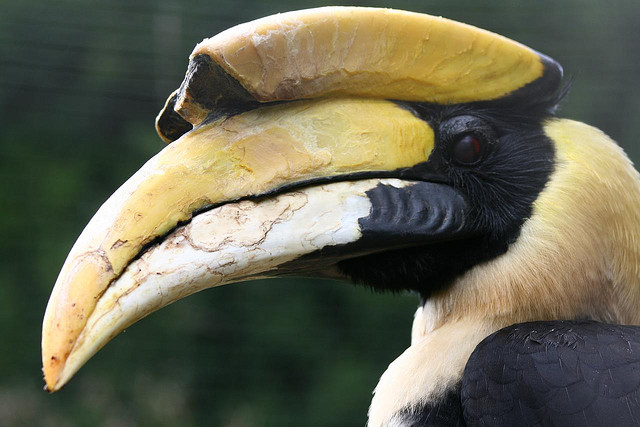
Quick answer: The festival is named after the great hornbill (Buceros bicornis), the large bird that runs through Naga folklore, ceremony and traditional dress as a symbol of grandeur and fidelity. Nagaland’s official state bird, however, is the Blyth’s tragopan, a rare pheasant. Both live in Nagaland’s forests; both are hard to see in the wild.
The bird that named a festival
The great hornbill is enormous, over a metre long, with a wingspan that whooshes audibly in flight, and unmistakable: yellow bill and casque, white belly, black wings with a white band. In Naga tradition its feathers crown warriors’ and dancers’ headdresses, and folk songs use the hornbill as a mark of nobility and faithful love. That cultural weight is why the state put the bird’s name on its biggest festival in 2000.
The state bird: Blyth’s tragopan
A common confusion: the hornbill names the festival, but the state bird of Nagaland is Blyth’s tragopan, a crimson-and-grey pheasant of high-altitude forests, shy enough that most Nagas have never seen one either.Intact tragopan habitat survives in Nagaland’s protected areas and community forests, one more reason the state’s conservation story matters.
Can you see hornbills in Nagaland?
Honestly: rarely, and only with luck and quiet. Great hornbills need large, old trees with hollows for nesting, so they survive best in Nagaland’s community-conserved forests. The hills around Khonoma, India’s first green village, whose community forest protects the tragopan, and the forests of Intanki National Park are the realistic bets. Sightings are a bonus, not a guarantee; go for the forest, celebrate the bird if it shows.
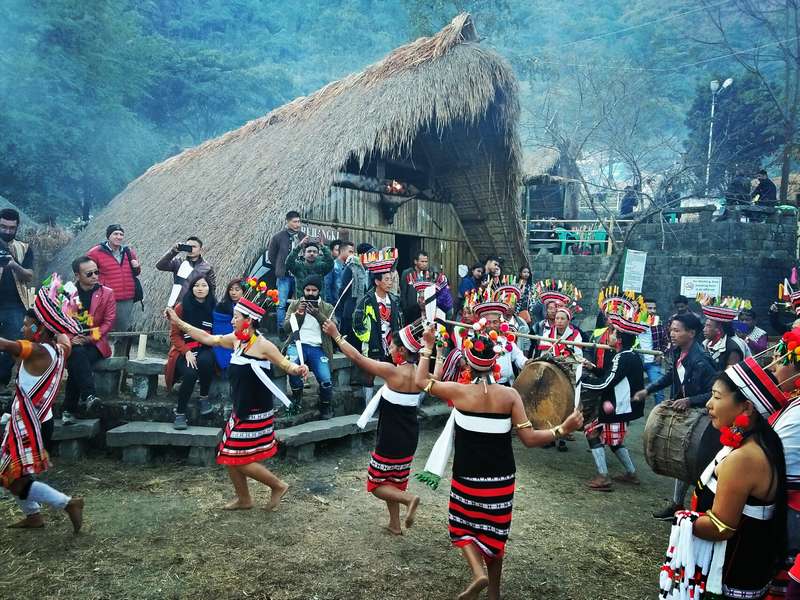
The certain sighting is cultural: the bird is everywhere at the Hornbill Festival, on the logo, on headdresses, in the dances, on stall fronts. If you want to understand why a bird carries a state’s imagination, the arena in December shows it in ten minutes.
Why the bird matters
The great hornbill is listed as Near Threatened, habitat loss and hunting have thinned it across its range. Its best protection in Nagaland has been exactly what the festival celebrates: the tribes’ own reverence for it. Culture, here, is the conservation plan.
Read Nagaland’s quick facts for more on the state, or plan a December trip around the festival in our Hornbill 2026 guide. The Khonoma day trip is the best add-on for forest and bird country.
Planning a trip like this?
We build itineraries around your dates, group and budget, a real person replies with an honest price.